
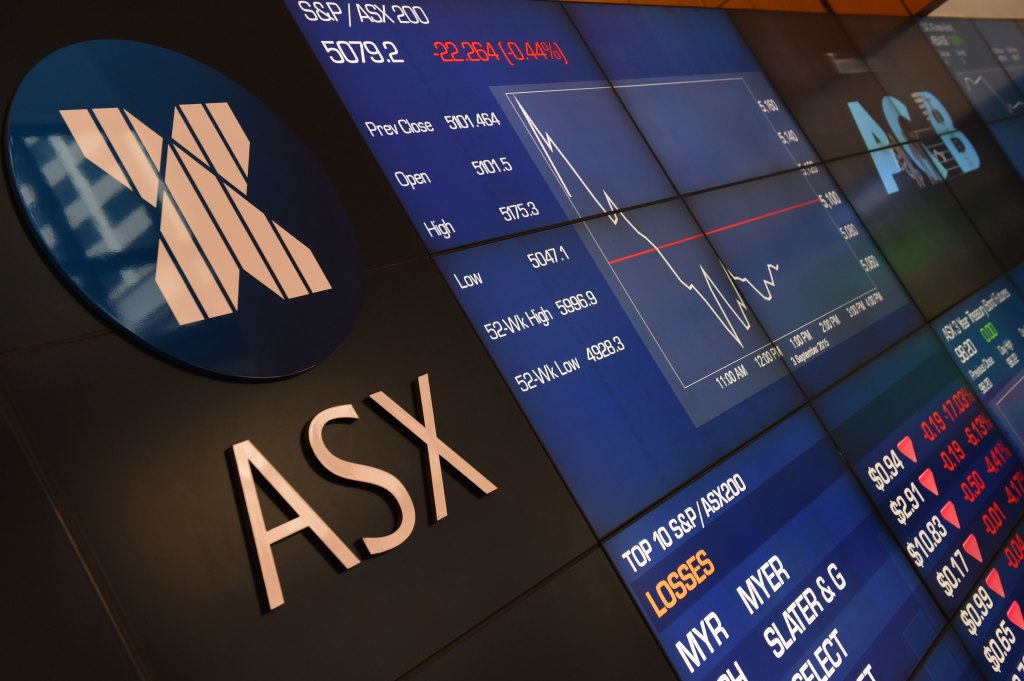
Listing on the Australian Securities Exchange is one of the hardest financing routes a business can take, and for most small and medium companies it is the wrong one. The ASX sets specific financial, ownership and governance thresholds that a company must clear before it can float, and the costs of getting there run well into six figures before a single share trades. This guide sets out exactly what the exchange requires, what it costs, and what the realistic alternatives are if your business doesn't meet the bar.
The two financial tests: profit or assets
Every company seeking admission to the ASX must satisfy one of two financial tests. You choose the one your business can meet — you do not need both.
| Requirement | Profit test | Assets test |
|---|---|---|
| Core financial threshold | A$1 million aggregated profit from continuing operations over the past three financial years, and A$500,000 consolidated profit from continuing operations in the last 12 months | A$4 million net tangible assets, or A$15 million market capitalisation |
| Working capital | No specific requirement | A$1.5 million minimum |
| Audited accounts | Three full financial years | Two full financial years |
| Typically suits | Established, consistently profitable operating businesses | Pre-revenue or early-stage companies — mining explorers, biotech, technology |
The profit test is the tougher of the two for most trading businesses, because the profit must come from continuing operations and be supported by audited accounts. One-off gains, asset sales and discontinued divisions do not count. The assets test exists largely to accommodate companies that have not yet generated earnings but have raised or hold substantial capital — which is why the majority of ASX small-cap floats, particularly in resources, come through this route.
Shareholder spread and free float
Meeting the financial test is only half the exercise. The ASX also requires a genuine market in your shares, which means a real spread of independent owners.
- At least 300 non-affiliated security holders, each holding a parcel worth at least A$2,000 that is not subject to escrow.
- A minimum 20% free float — that is, at least a fifth of the company's securities held by people who are not related parties or otherwise affiliated with the company.
- A minimum issue price of 20 cents per security.
The spread requirement is usually satisfied through the IPO itself rather than beforehand, so ASX approval is generally conditional on the offer successfully attracting enough investors. This is where a number of floats come unstuck: the business qualifies on paper, but the raising fails to attract the required breadth of shareholders in a soft market.
Governance, structure and the people test
Beyond the numbers, ASX admission brings a set of structural and governance conditions that many private companies have never had to meet.
- Constitution. The company's constitution must be consistent with the Listing Rules, or adopt the prescribed provisions in Appendix 15A or 15B.
- Good fame and character. ASX must be satisfied that every director, the CEO and the CFO is of good fame and character at the date of listing. This involves background checks including criminal history and bankruptcy checks.
- Corporate governance statement. The company must disclose the extent to which it will follow the ASX Corporate Governance Council recommendations, and explain any departures.
- Trading policy. A compliant securities trading policy is required for all listed entities.
- Restricted securities (escrow). Securities issued to related parties, promoters and vendors are typically escrowed for up to 24 months, meaning founders cannot sell immediately on listing.
- Prospectus or information memorandum. A disclosure document must be lodged with ASIC, prepared to a legal standard that carries personal liability for directors.
What it actually costs
The admission thresholds are the entry ticket. The cost of the process is what surprises most business owners.
| Cost item | Indicative amount |
|---|---|
| Total IPO costs (advisers, legal, accounting, marketing) | 5–10% of the amount raised |
| Underwriting / broker fees | 4–7% of the amount raised |
| ASIC prospectus lodgement | ~A$3,200 |
| ASX in-principle application | ~A$5,000 plus GST |
| ASX initial listing fee | Scales with market cap — around A$77,000 for a A$10m company |
| Annual ASX listing fee | ~A$27,000–A$64,000 depending on size |
| Typical timeline | 3–6 months, and rarely less than three |
Taken together, professional and regulatory fees commonly absorb somewhere between 9% and 17% of the capital raised. A company raising A$8 million may see well over A$1 million consumed before the money reaches the business.
Then there is the recurring cost of being listed — continuous disclosure, audit and assurance, directors' and officers' liability insurance, company secretarial support, investor relations and an independent board. Research by the Australasian Investor Relations Association put the median annual cost of being a listed entity at A$7.3 million across the ASX 300, with the lowest band — companies outside the ASX 200 — still carrying a median of A$4.4 million a year. Smaller companies spend considerably less than that, but the fixed compliance burden does not scale down proportionately, and it is precisely why some small caps eventually choose to delist.
The honest summary
If your business generates under A$500,000 in annual profit, holds less than A$4 million in net tangible assets, and has no near-term prospect of a A$15 million valuation, the ASX is not currently available to you — and even if it were, the cost structure would likely destroy more value than the capital creates. That is not a failure. It simply means your capital should come from somewhere else.
If you don't meet the requirements: the real alternatives
Most successful Australian businesses never list, and the funding market for private companies is considerably deeper than it was a decade ago. The right option depends on what the money is for, how quickly you need it, and whether you are willing to give up equity.
| Funding option | Best for | What you give up |
|---|---|---|
| Bank term debt | Established businesses with consistent cash flow and security to offer | Interest, covenants, usually personal guarantees or property security |
| Non-bank and private lenders | Businesses that fail bank serviceability tests but have strong trading | Higher interest rates, shorter terms |
| Invoice and trade finance | Companies with long debtor days — wholesale, labour hire, construction | A discount on invoice value; no equity dilution |
| Asset and equipment finance | Capital equipment, vehicles, plant and machinery | Security over the financed asset |
| Private equity or venture capital | High-growth businesses with a clear scale story | Meaningful equity, board seats, an exit timetable |
| Angel investors and private placements | Early-stage companies needing under A$2 million | Equity, and often an active investor relationship |
| Crowd-sourced funding (CSF) | Consumer-facing businesses with a following; regulated regime for unlisted public companies | Equity, plus disclosure and reporting obligations |
| Government grants and the R&D Tax Incentive | Businesses conducting eligible research and development activity | Nothing but the administrative effort — this is non-dilutive funding |
| Retained earnings and working capital reform | Almost every business, and consistently underused | Nothing — this is cash you already have, trapped in the cycle |
That last row deserves emphasis. A great many businesses approach the capital market when the actual problem is a working capital cycle that is quietly funding their customers. Tightening debtor terms, renegotiating supplier payments and forecasting cash accurately can release capital faster and more cheaply than any external raise — and with no dilution at all.
What every funding route has in common
Whether you are preparing for an ASX float, approaching a bank, or pitching a private investor, the same thing gets examined first: your financial records. Every option above requires some combination of clean historical accounts, defensible forecasts, and a clear explanation of unit economics.
This is where most rejections originate. Not a weak business, but records that cannot support the story the owner is telling. Audited or audit-ready statements, reconciled management accounts, accurate cash flow forecasting and clean tax compliance are the minimum standard for any serious conversation about capital. Businesses that maintain these continuously raise money faster and on better terms than those that scramble to assemble them after deciding they need funding.
Need help finding the right funding path?
If ASX admission is out of reach for now, the practical next step is getting your financials to a standard that lenders and investors will back — and identifying which funding route genuinely fits your business.
Numerix Accounting works with small and medium businesses across Australia, from sole traders and startups through to established companies and trusts. Their services span bookkeeping, payroll, accounting and audit-ready financial statements, taxation, business advisory — including management accounting, cash flow forecasting and KPI reporting — and finance and lending solutions. They operate from two Sydney offices at North Strathfield and Liverpool, with remote support nationally, and specialise in cloud-based Xero setups that give owners real-time visibility of their numbers.
Their industry experience covers construction, medical practices, restaurants, e-commerce, transport and non-profits.
Frequently asked questions
Can a small business list on the ASX?
Only if it meets either the profit test (A$1 million aggregated profit over three years plus A$500,000 in the last 12 months) or the assets test (A$4 million net tangible assets or A$15 million market capitalisation), along with the 300-shareholder spread and 20% free float requirements. Most small businesses do not meet these thresholds.
How long does an ASX listing take?
Typically three to six months from commencement to listing. Three months is achievable only for a well-prepared company with engaged management in favourable market conditions.
What is the minimum amount you need to raise to list on the ASX?
There is no fixed minimum raising amount, but the practical floor is set by the A$1.5 million working capital requirement under the assets test, the 20% free float, the 300-shareholder spread, and the need for the raising to comfortably exceed transaction costs of 9–17%. In practice, raisings below roughly A$5 million rarely justify the expense.
Is there an alternative exchange for smaller Australian companies?
Yes. The National Stock Exchange of Australia (NSX) operates with lower admission thresholds and fees than the ASX, though with considerably less liquidity and analyst coverage. For most SMEs, private funding remains the more practical route.
Disclaimer: This article is general information only and does not constitute financial, legal or tax advice. It does not take into account your objectives, financial situation or needs. ASX Listing Rules, fees and thresholds are subject to change — confirm current requirements directly with the ASX and seek advice from appropriately licensed professionals before making any decision. Figures cited are indicative and current at the time of writing.
