
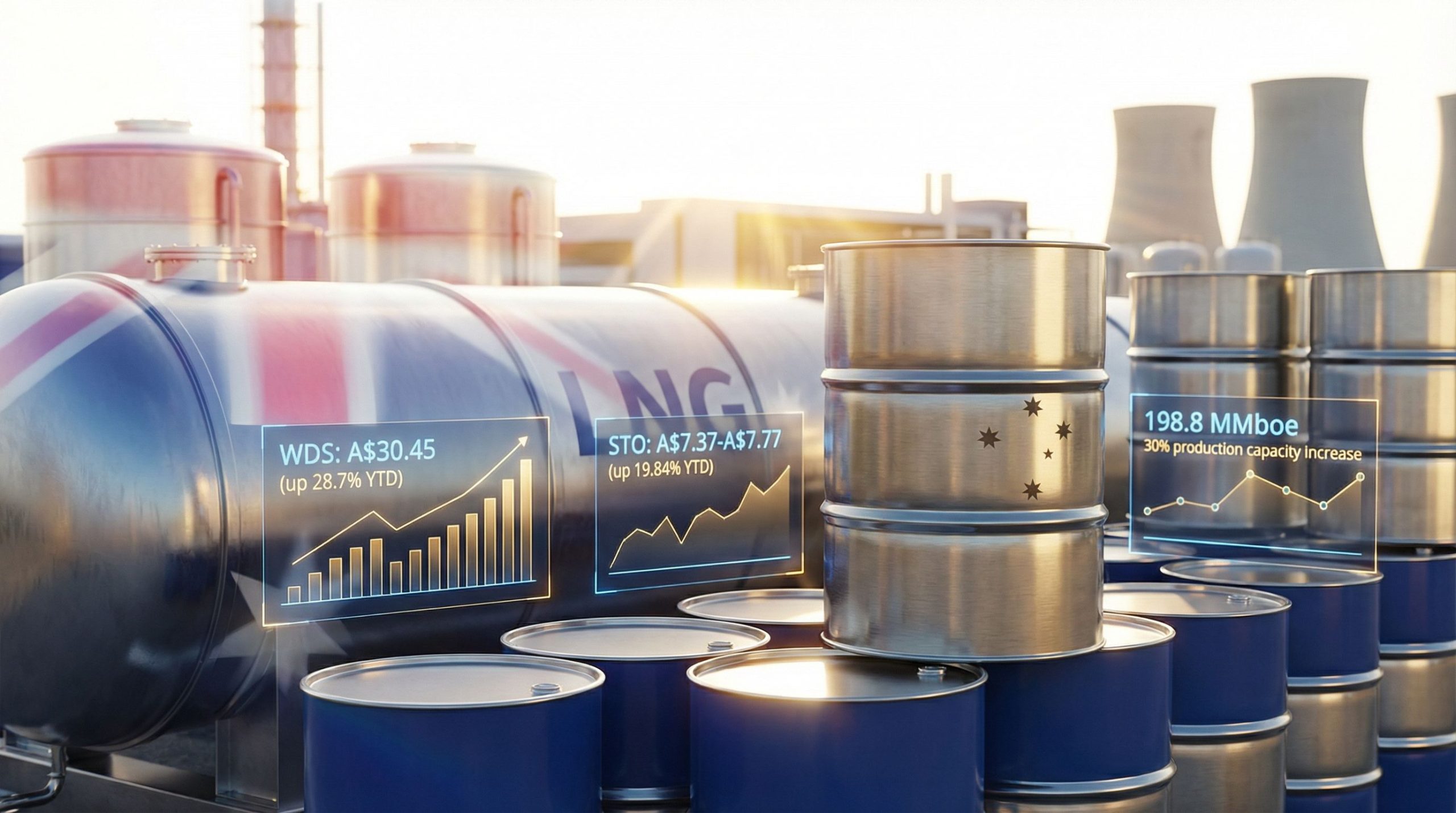
As of April 30, 2026, Woodside Energy stands at a pivotal juncture. The company has successfully navigated a volatile 2025 to emerge as a dominant global LNG player, now entering a high-execution phase for its transformative “three-pillar” growth strategy.
1. The Growth Engine: Key Project Timelines
The next 24 months are defined by Woodside’s transition from heavy capital expenditure to production ramp-up.
-
Scarborough & Pluto Train 2 (Australia): This is the crown jewel. As of mid-2026, the project is over 90% complete. First LNG cargo is firmly targeted for the second half of 2026. This project will add approximately 8 Mtpa of LNG capacity, significantly boosting cash flows from 2027 onwards.
-
Trion (Mexico): With a final investment decision (FID) already in the rearview, the focus through 2026–27 is on construction. First oil is targeted for 2028, making this a medium-term growth lever.
-
Beaumont Clean Ammonia (USA): Construction is advancing on this lower-carbon project, with 2026–27 serving as the critical period for commissioning and initial production tests.
2. Financial Performance & Analyst Consensus
Woodside’s share price has shown remarkable resilience, trading near $33.55 (up ~40% year-to-date) as it captures the “Hormuz Premium” and strong global gas demand.
| Metric | 2025 Actual (US$) | 2026 Forecast (Est.) | 2027 Outlook |
| Operating Revenue | $12.9 Billion | $14.2 Billion | $15.8 Billion |
| Net Profit (NPAT) | $2.7 Billion | $2.9 Billion | $3.4 Billion |
| Dividend Yield | ~5.0% | 4.8% – 5.2% | High (Post-Scarborough) |
Analyst View: Current DCF (Discounted Cash Flow) models suggest Woodside is fundamentally undervalued relative to its long-term cash generation potential. Bull cases see a fair value target near $40.00, assuming seamless execution of Scarborough and sustained Brent prices above $90.
3. Dividend Strategy: The Yield Sanctuary
Woodside remains one of the ASX’s premier income stocks.
-
2026 Dividend: Investors can expect a total annual dividend of roughly A$1.58 – A$1.65 per share.
-
Sustainability: The company maintains a payout ratio of 50–80% of underlying NPAT. With the heavy lifting on Scarborough CAPEX concluding in late 2026, 2027 is widely expected to be a “harvest year” for shareholders, potentially seeing special dividends or buybacks.
4. The “New Energy” Pivot
By 2027, Woodside’s transition strategy will no longer be theoretical.
-
The company has a US$5 billion investment target in new energy products (hydrogen, ammonia, and CCS) by 2030.
-
Carbon Intensity: Scarborough is set to be one of the lowest carbon intensity sources of LNG for North Asian markets (containing <0.1% $CO_2$ in the reservoir), providing a competitive advantage as carbon taxes and “green” premiums become standard in global trade.
Investment Summary: The Next 2 Years
The Bull Case:
-
Successful Start-up: Scarborough delivers first gas on time and on budget in late 2026.
-
Energy Security: Persistent geopolitical tension keeps LNG prices elevated.
-
Capital Return: Massive free cash flow in 2027 leads to record-breaking dividends.
The Risks:
-
Operational Delays: Any late-stage technical issues at Pluto Train 2 could dampen 2027 revenue.
-
Regulatory Headwinds: Potential “windfall” taxes or stricter domestic gas reservation policies in Australia.
Final Verdict: Woodside is transitioning from a “Capex-heavy explorer” to a “Cash-flow machine.” For investors seeking a blend of high-yield income and exposure to global energy security, the 2026–2027 window represents the peak of its value-creation cycle.
